
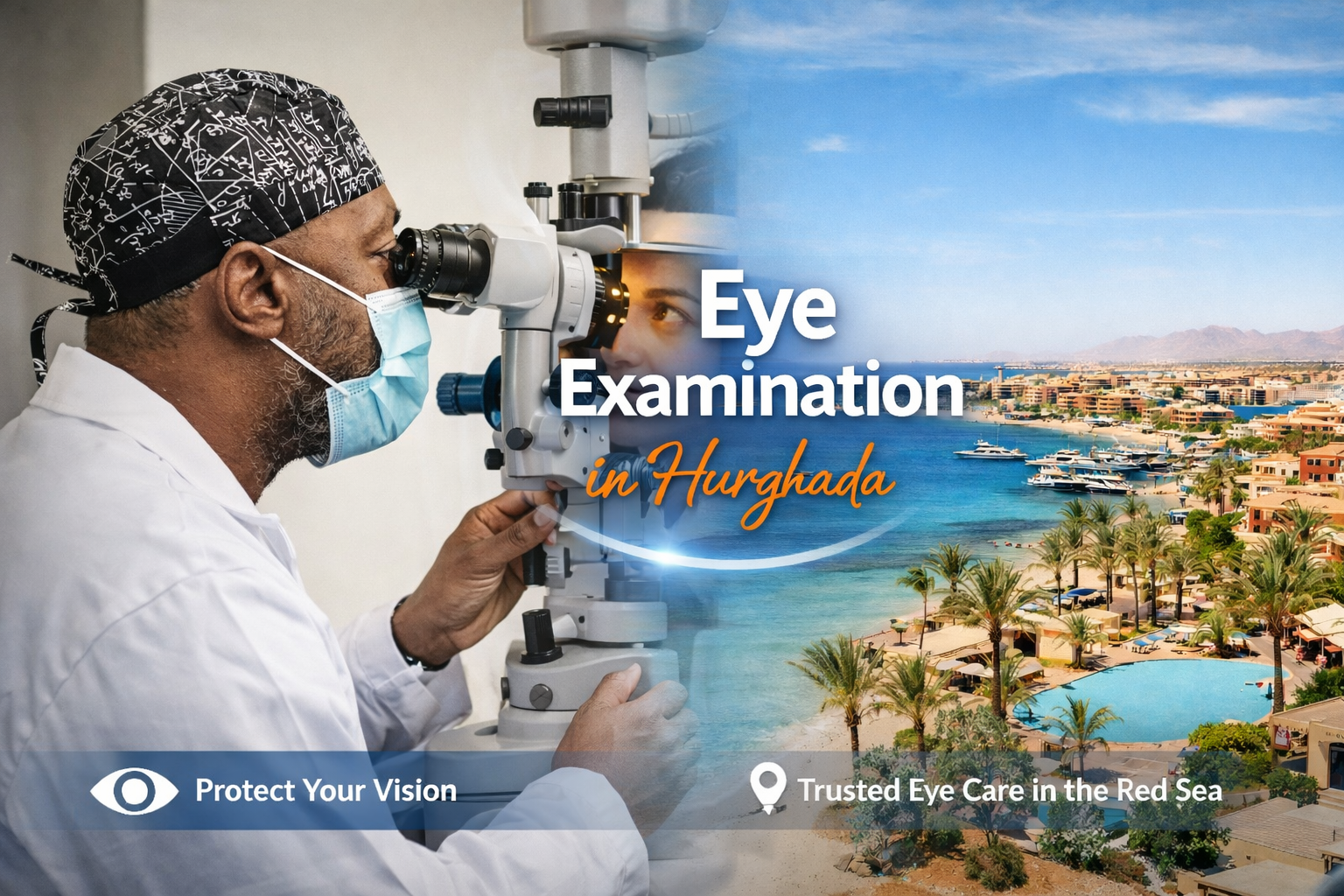
Comprehensive Eye Examination in Hurghada | General Eye Care
Also available in:
 العربية (Arabic)
  Deutsch (German)
  Русский (Russian)
Protecting Your Vision with Preventive Eye Care
A comprehensive eye examination is the foundation of lifelong visual health. Many serious eye diseases develop silently without early symptoms. Regular eye check-ups allow early diagnosis, timely treatment, and prevention of permanent vision loss.
At our eye clinic in Hurghada, we provide detailed general eye examinations for adults and children using advanced diagnostic technology and evidence-based medical protocols.
Vision is not something to wait on. Prevention always beats emergency treatment.
What Is a Comprehensive Eye Examination?
A general eye examination is a detailed medical evaluation of:
• Visual acuity (clarity of vision)
• Refraction (glasses prescription)
• Eye alignment and movement
• Intraocular pressure (glaucoma screening)
• Anterior segment examination (cornea, lens)
• Retinal and optic nerve evaluation
• Macular assessment
• Tear film and ocular surface health
This is not just a “glasses test.” It is a full medical assessment of eye health.
Who Should Have Regular Eye Examinations?
Eye examinations are recommended for:
• Adults over 40 (glaucoma screening)
• Patients with diabetes
• Patients with hypertension
• Children with learning or vision complaints
• Individuals with family history of glaucoma or retinal disease
• Contact lens users
• Patients with blurry vision, headaches, or eye strain
Even healthy individuals should undergo routine eye check-ups every 1–2 years.
Conditions Detected During Eye Examination
A comprehensive eye check in Hurghada can detect:
• Glaucoma
• Cataract
• Diabetic retinopathy
• Macular degeneration
• Retinal tears or detachment
• Keratoconus
• Dry eye syndrome
• Refractive errors (myopia, hyperopia, astigmatism)
Many of these conditions develop silently before symptoms appear.
Benefits of Regular Eye Care
• Early detection of serious eye disease
• Prevention of permanent vision loss
• Accurate glasses prescription
• Monitoring of chronic conditions
• Improved visual comfort
• Better quality of life
The retina and optic nerve are part of the central nervous system. An eye exam often reveals systemic disease before other symptoms appear.
What to Expect During Your Visit
Your eye examination typically includes:
• Vision testing
• Automated and manual refraction
• Slit-lamp examination
• Intraocular pressure measurement
• Dilated fundus examination (if needed)
Pediatric Eye Examination
Children may not complain about poor vision because they assume what they see is normal.
Early eye examination helps detect:
• Lazy eye (amblyopia)
• Squint (strabismus)
• Refractive errors
• Developmental visual problems
Early intervention dramatically improves outcomes.
Why Choose Eye Examination in Hurghada at Our Clinic?
• Modern diagnostic equipment
• Experienced ophthalmologist
• Comprehensive medical evaluation
• Personalized treatment plans
• Long-term follow-up care
We focus on prevention, early diagnosis, and preserving vision for the future.
Frequently Asked Questions (FAQ)
How often should I have an eye examination?
Adults should have an eye exam every 1–2 years. Patients with diabetes, glaucoma, or other eye diseases may need more frequent visits.
Is a vision test the same as a full eye examination?
No. A vision test checks glasses prescription. A comprehensive eye exam evaluates overall eye health and screens for disease.
Does eye examination hurt?
No. Most tests are painless. Some mild light sensitivity may occur after dilation.
Can eye examination detect diabetes?
Yes. Diabetic changes in the retina can often be detected before symptoms appear.
Do I need dilation during every visit?
Not always. Dilation is performed when detailed retinal examination is required.