

Cataract Surgery in Hurghada | Advanced Phaco & IOL Implantation
Also available in:
 العربية (Arabic)
  Deutsch (German)
  Русский (Russian)
Cataract Surgery in Hurghada – Advanced Lens Replacement for Clear Vision
Cataract surgery is a safe and highly effective procedure designed to restore clear vision by removing the cloudy natural lens of the eye and replacing it with a clear artificial intraocular lens (IOL).
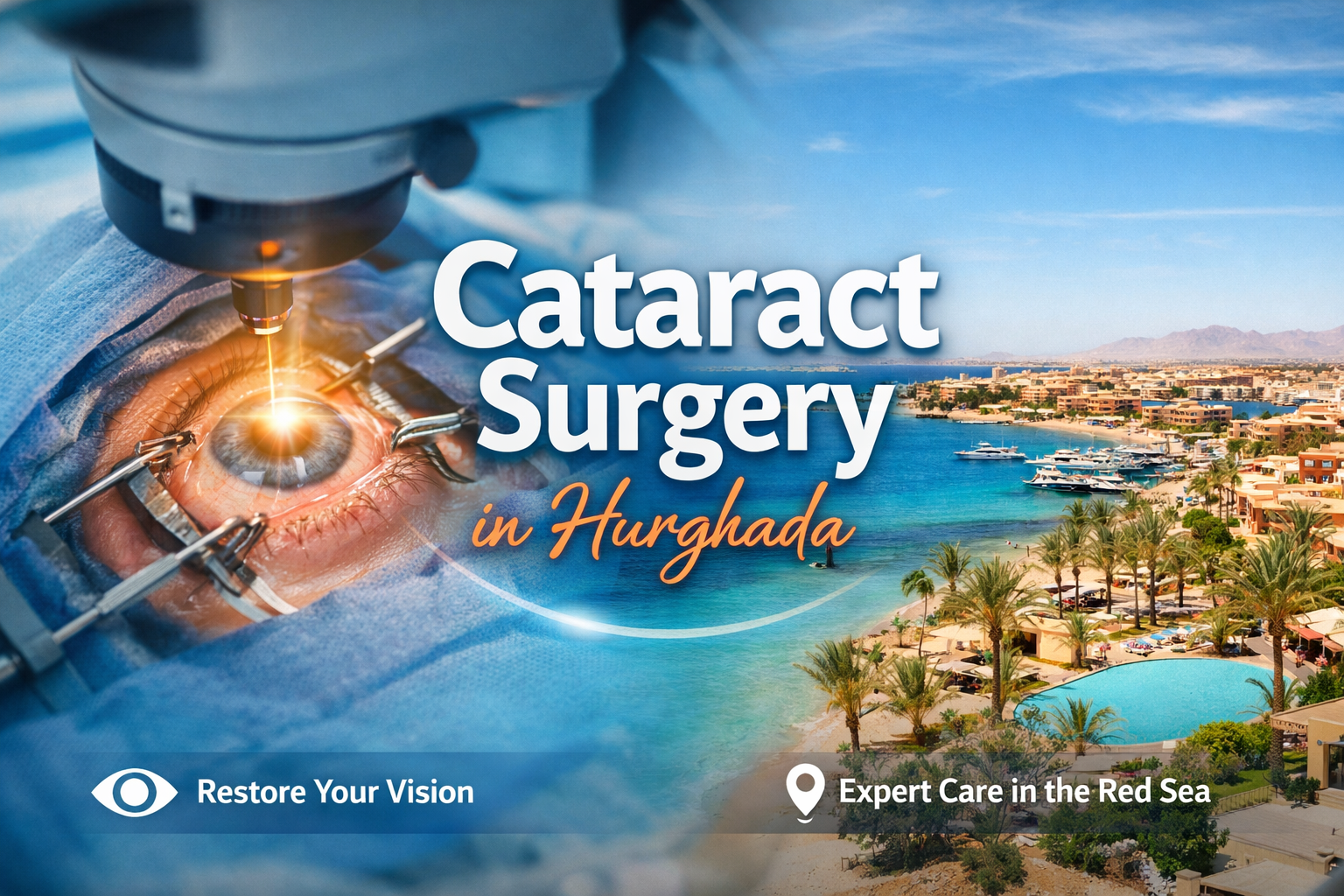
In our Hurghada eye clinic, we use modern phacoemulsification technology, a minimally invasive technique that uses ultrasound energy to break up and remove the cataract through a very small incision. A foldable intraocular lens is then implanted to restore visual clarity.
The procedure is performed under local anesthesia (eye drops), is typically painless, and usually takes 10–20 minutes. Most patients return home the same day.
What Is a Cataract?
A cataract occurs when the natural lens of the eye becomes cloudy, leading to blurred or dim vision. It commonly develops with aging but may also occur due to diabetes, trauma, prolonged steroid use, or previous eye surgery.
Common symptoms include:
- Blurred or cloudy vision
- Increased glare, especially at night
- Difficulty reading or driving
- Faded or yellowish colors
- Frequent changes in glasses prescription
Indications for Cataract Surgery
Cataract surgery is recommended when:
- Vision interferes with daily activities (reading, driving, work)
- Glasses no longer provide adequate improvement
- Cataract affects retinal examination or treatment
- The patient desires improved visual quality
Surgery timing is based on visual function and patient needs, not only cataract “maturity.”
Types of Intraocular Lenses (IOL)
Different lens options are available depending on visual goals:
- Monofocal IOL: Corrects distance vision (glasses may still be needed for reading)
- Multifocal IOL: Provides distance and near vision correction
- Toric IOL: Corrects astigmatism
- Extended Depth of Focus (EDOF) IOL: Enhances range of vision
Lens selection is individualized after detailed eye measurements and discussion of lifestyle needs.
Benefits of Modern Cataract Surgery
- High success rate and predictable outcomes
- Small incision with rapid healing
- Minimal discomfort
- Improved clarity and brightness of vision
- Reduced dependence on glasses (depending on IOL choice)
- Same-day discharge
Cataract surgery is one of the most successful surgical procedures worldwide.
Risks and Safety
Cataract surgery is very safe, but as with any surgical procedure, potential risks may include:
- Temporary inflammation
- Mild corneal swelling
- Infection (rare)
- Increased eye pressure
- Posterior capsule opacification (secondary cataract)
- Rare retinal complications
Careful preoperative evaluation and proper postoperative care significantly minimize complications.
Before and After Expectations
Before Surgery
- Comprehensive eye examination and biometry measurements
- Discussion of IOL options and visual expectations
- Medical assessment if needed
- Fasting instructions (if required)
After Surgery
- Vision often improves within days
- Eye drops are prescribed for several weeks
- Mild irritation or light sensitivity may occur temporarily
- Most daily activities can resume within a few days
- Follow-up visits are essential to monitor healing
Final visual stability is typically achieved within a few weeks.
Why Choose Cataract Surgery in Hurghada?
Patients in Hurghada benefit from advanced surgical technology, personalized IOL selection, and comprehensive pre- and postoperative care. Early evaluation ensures optimal timing and the best visual outcome.
Frequently Asked Questions (FAQ)
1. Is cataract surgery painful?
No. The procedure is performed under topical anesthesia (eye drops), and most patients feel only mild pressure without pain.
2. How long does cataract surgery take?
The surgery usually takes 10–20 minutes per eye.
3. When can I return to normal activities?
Most patients resume normal daily activities within a few days, avoiding heavy lifting for a short period.
4. Will I still need glasses after surgery?
It depends on the type of intraocular lens chosen. Premium lenses may reduce dependence on glasses.
5. What is a secondary cataract?
Posterior capsule opacification can occur months or years after surgery and is easily treated with a quick, painless laser procedure.