

Also available in:
 العربية (Arabic)
  Deutsch (German)
  Русский (Russian)
Floaters: When Should I Worry in Hurghada?
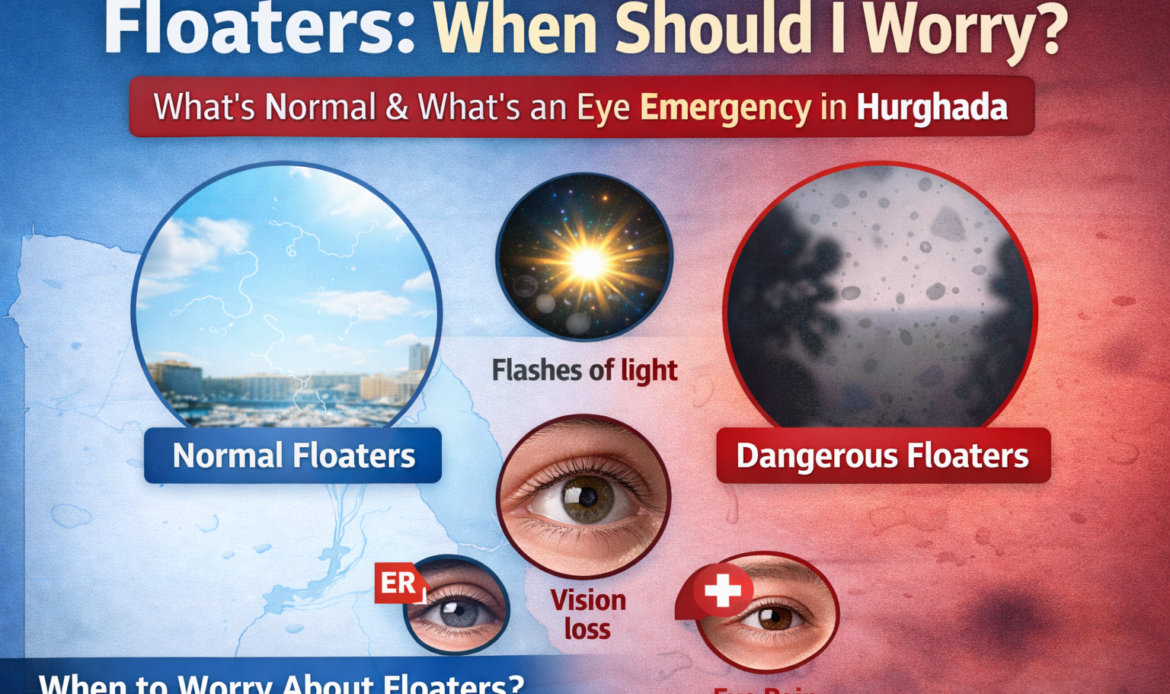
Eye floaters are small dark spots, threads, or cobweb-like shapes that drift across your vision. In many cases, they are harmless and part of natural aging. However, sudden or severe floaters can sometimes indicate a serious retinal problem.
If you notice a sudden increase in floaters, especially with flashes of light or a shadow in your vision, urgent retinal evaluation is necessary.
What Are Eye Floaters?
Floaters are tiny clumps inside the vitreous gel that fills the eye. As we age, the vitreous becomes more liquefied and can cast shadows on the retina, which appear as moving spots.
They are most noticeable when looking at bright backgrounds such as the sky or a white wall.
Common Causes of Floaters
1. Posterior Vitreous Detachment (PVD)
The most common cause. It happens when the vitreous separates from the retina. It is common after age 40.
2. Aging Changes
Natural degeneration of the vitreous gel.
3. Myopia (Nearsightedness)
High myopia increases the risk of floaters and retinal complications.
4. After Eye Surgery
Floaters may appear after cataract or other intraocular procedures.
When Are Floaters Dangerous?
Floaters become concerning when they are associated with:
- Sudden increase in number
- Flashes of light
- A curtain or shadow in peripheral vision
- Sudden blurred vision
These symptoms may indicate a retinal tear or retinal detachment, which requires immediate treatment.
If you experience these signs in Hurghada or nearby areas, urgent retinal examination with dilated fundus evaluation and OCT imaging is recommended.
Floaters in One Eye vs Both Eyes
Floaters in one eye are more suspicious for retinal issues.
Floaters in both eyes that develop gradually are more likely related to normal aging changes.
Sudden symptoms in one eye should never be ignored.
How Are Floaters Evaluated?
A comprehensive eye examination includes:
- Dilated retinal examination
- Peripheral retinal check
- OCT imaging if needed
Most floaters do not require treatment. However, retinal tears can be treated with laser therapy to prevent retinal detachment.
Treatment Options for Floaters
In most cases, no treatment is needed.
Severe, persistent floaters affecting vision may rarely require:
- Laser vitreolysis (selected cases)
- Vitrectomy surgery (rare and reserved for severe cases)
Treatment decisions depend on symptom severity and retinal health.
Why Early Examination Matters in Hurghada
If you live in Hurghada, early retinal examination ensures that small retinal tears are treated before they progress to retinal detachment. Delayed diagnosis can lead to permanent vision loss.
Follow-up is especially important for patients with high myopia or previous eye surgery.
Frequently Asked Questions About Floaters in Hurghada
Are floaters normal?
Yes. Mild floaters are common, especially after age 40.
When should I worry about floaters?
You should worry if floaters appear suddenly, increase rapidly, or are associated with flashes or a dark curtain in your vision.
Can floaters go away on their own?
They usually become less noticeable over time as the brain adapts.
Are floaters a sign of retinal detachment?
Not always. However, sudden floaters combined with flashes or vision shadow may indicate retinal detachment and require urgent evaluation.
Author: Dr. Aldemerdash Omar, Ophthalmology consultant – Hurghada
Location: Hurghada, Red Sea, Egypt