
Click here to chat with me!
Search our website now


Also available in:
 العربية (Arabic)
  Deutsch (German)
  Русский (Russian)
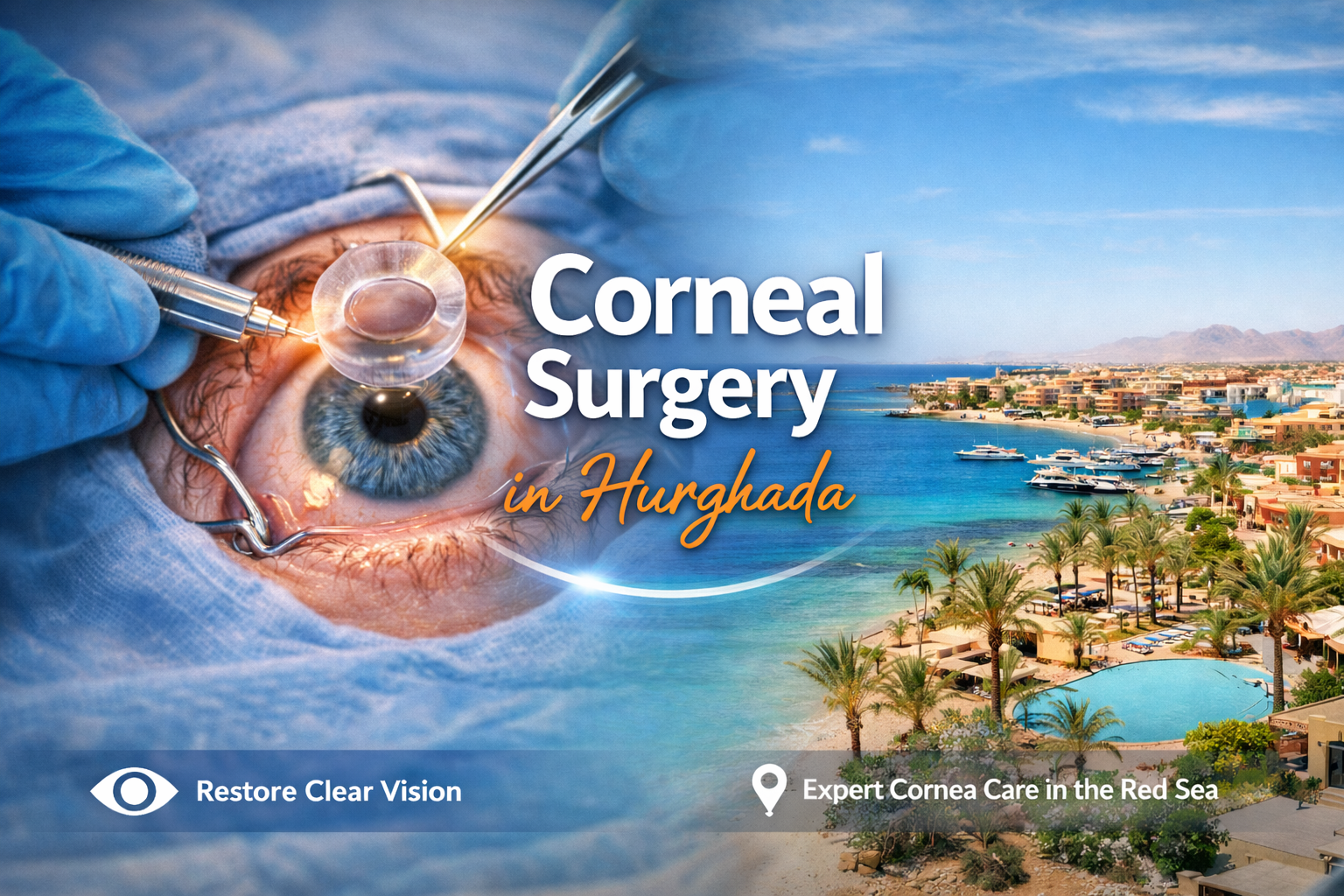
Corneal surgery is performed to treat diseases, damage, or structural abnormalities of the cornea — the clear front surface of the eye responsible for focusing light.
When the cornea becomes scarred, thin, swollen, infected, or distorted, vision can become severely blurred. In many cases, surgical treatment is required to restore clarity and improve visual function.
At our eye clinic in Hurghada, we provide advanced corneal procedures including corneal transplantation, lamellar keratoplasty, and treatment for keratoconus and corneal scarring using modern microsurgical techniques.
Early intervention improves outcomes and helps preserve long-term visual quality.
Corneal surgery includes procedures that repair or replace damaged corneal tissue.
Depending on the condition, surgery may involve:
• Removing diseased corneal layers
• Replacing part of the cornea (lamellar transplant)
• Full-thickness corneal transplant (penetrating keratoplasty)
• Treating keratoconus
• Removing corneal scars
• Managing severe corneal infections
The cornea must remain transparent and regularly shaped to focus light accurately. Even small irregularities can significantly affect vision.
Corneal surgery may be recommended for:
• Advanced keratoconus
• Corneal scarring after infection or trauma
• Corneal ulcers with thinning
• Corneal edema (swelling)
• Fuchs’ endothelial dystrophy
• Failed previous corneal transplant
• Severe corneal irregularity not corrected with glasses or contact lenses
Symptoms often include blurred vision, glare, halos, eye pain, or progressive visual distortion.
Replacement of damaged corneal tissue with healthy donor tissue.
Selective replacement of specific corneal layers, preserving healthy tissue.
Advanced endothelial procedures for corneal edema and Fuchs’ dystrophy.
When cross-linking or lenses are insufficient, surgical reshaping or transplantation may be required.
• Restores corneal clarity
• Improves visual sharpness
• Reduces distortion and glare
• Relieves pain from severe corneal disease
• Preserves structural stability of the eye
• Enhances quality of life
Modern corneal techniques allow faster recovery and better visual outcomes compared to older full-thickness procedures.
As with any microsurgery, potential risks include:
• Graft rejection
• Infection
• Astigmatism
• Delayed healing
• Recurrence of underlying disease
• Need for repeat surgery
Close follow-up and strict adherence to postoperative care significantly reduce complications.
Before corneal surgery in Hurghada, patients undergo:
• Detailed slit-lamp examination
• Corneal topography
• Pachymetry (corneal thickness measurement)
• Endothelial cell count
• Visual acuity assessment
• Medical evaluation
Treatment options are carefully discussed based on the severity and type of corneal disease.
Recovery varies depending on the procedure.
• Eye drops for several months
• Gradual visual improvement
• Temporary blurred vision
• Protective eye shield initially
• Regular follow-up visits
In corneal transplantation, visual stabilization may take several months as sutures are adjusted or removed.
Patience is essential. The cornea heals slowly but steadily.
• Modern surgical microscopes and technology
• Experienced cornea specialist
• Access to advanced transplant techniques
• Comprehensive diagnostic imaging
• Long-term postoperative monitoring
We focus on preserving transparency, structural integrity, and optimal visual quality.
Yes. Corneal transplantation has a high success rate when performed for appropriate indications and followed by proper postoperative care.
Most procedures take between 45 and 90 minutes depending on complexity.
Possibly. Some patients require glasses or contact lenses for optimal vision after healing.
Initial healing occurs within weeks, but full visual stabilization may take several months.
Redness, pain, light sensitivity, and sudden vision decrease should be reported immediately.
We here to offer you the best eye care
Click here to chat with me!
Search our website now
